What is a simple vegetarian meal-prep routine for a busy week?
Prep components, not meals. One grain, one pulse, one tray of roasted vegetables and one sauce, in about seventy minutes, gives you five different lunches instead of five identical ones. Cool everything fast, keep cooked rice for a day rather than a week, and reheat any portion only once.
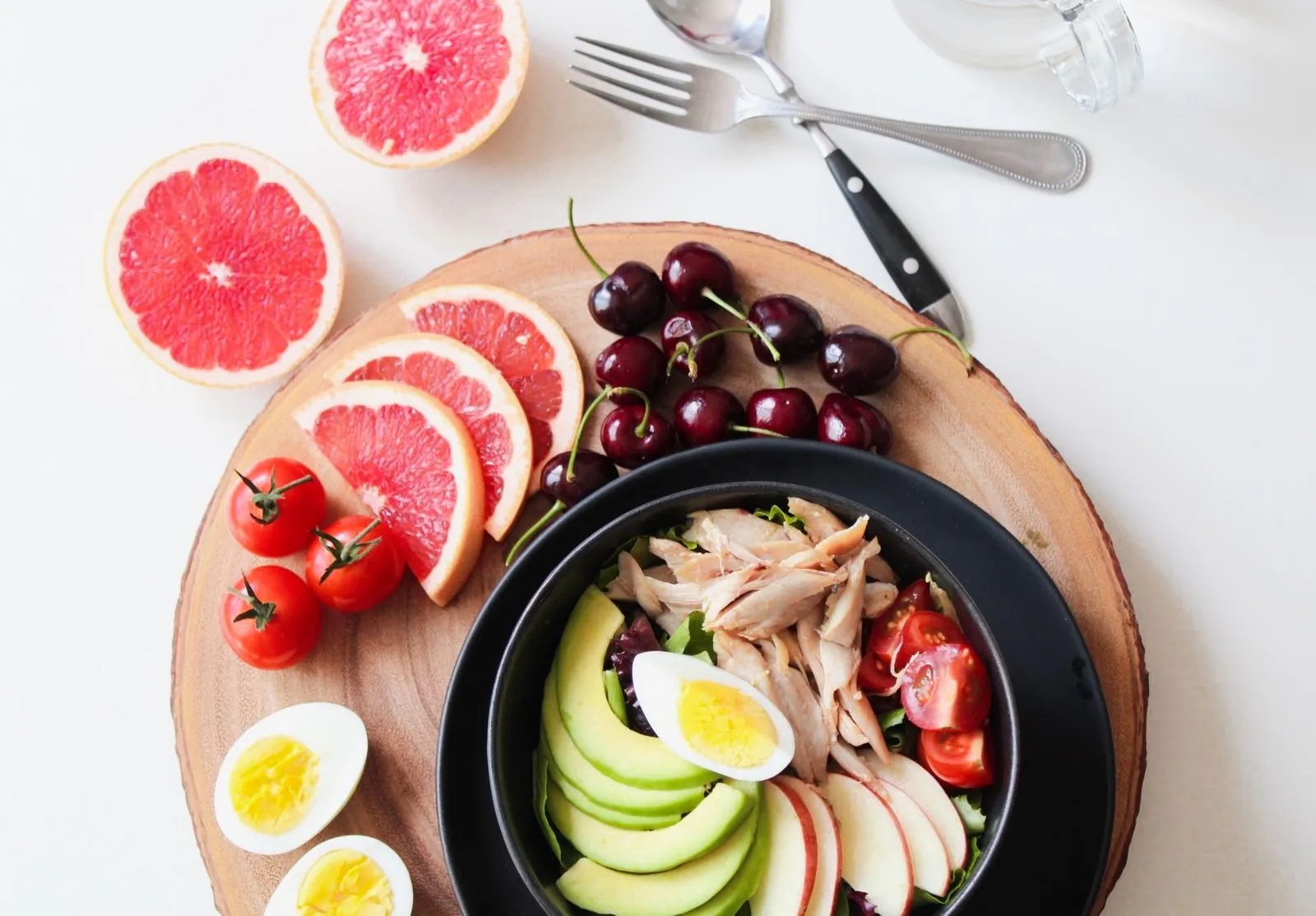
Everyone has seen the photograph: five identical containers, stacked, each holding the same beige rectangle of food. By Wednesday you hate it. By Thursday it is in the bin and you are ordering something.
The failure there is not effort. It is that meals were prepped instead of ingredients, and a finished meal has exactly one use while an ingredient has five.
Chapters 1 and 2 gave you the structure of a filling vegetarian lunch and the sources to build it from. This chapter is the Sunday that makes both of them happen on a Tuesday.
The evidence that planning is the thing, not cooking#
Two pieces of research are worth knowing before you spend a Sunday afternoon on this.
The first is from Julia Wolfson, then at the Johns Hopkins Center for a Livable Future, who analysed dietary recall data from more than 9,000 American adults. The pattern was consistent across the sample.
When people cook most of their meals at home, they consume fewer carbohydrates, less sugar and less fat than those who cook less or not at all.
The people cooking six or seven nights a week also ate fewer calories on the occasions they did eat out, which is the more interesting half of the finding. The effect was not confined to the meals they cooked.
The second comes from France. Ducrot and colleagues looked at meal planning specifically, in 40,554 participants of the NutriNet-Sante cohort, and found meal planners had greater food variety, better adherence to national dietary guidelines, and lower odds of obesity.
Why it works. Both are observational, so they describe an association rather than proving cause. But the mechanism is not mysterious: a decision made on Sunday, with a full stomach and no time pressure, is a better decision than the one made at 8:40pm on Thursday.
How you apply it at a desk. Notice that the French study measured planning, not cooking. If a full prep session is beyond you this week, planning alone still moves the needle. Decide what Tuesday looks like and buy for it.
Components beat meals#
Here is the whole method in one paragraph. Cook four things that are not meals: a grain, a pulse, a tray of roasted vegetables, and a sauce. Store them separately. Combine them differently each day.
Four components in a fridge produce a bowl on Monday, a wrap on Tuesday, a salad on Wednesday and a soup base on Thursday. Five identical assembled meals produce Monday, and then four days of resentment.
Why it works. The French study found meal planners ate a wider variety of foods, and variety is exactly what full-meal prepping destroys. Components also fail gracefully: if you get bored of one, you have replaced a quarter of your lunch rather than all of it.
How you apply it at a desk. The sauce is the component people skip and the one that does the most work. A jar of tahini and lemon, a coriander chutney, a yoghurt and garlic dressing, or a chilli oil turns the same three components into three different lunches by taste alone.
The food safety part, which is not optional#
Batch cooking means food sitting for days, and a chapter that sends you into that without the rules would be irresponsible. The rules are short.
Cooked rice is the one to take seriously. Uncooked rice can carry spores of a bacterium called Bacillus cereus, and those spores survive cooking. Left at room temperature, they germinate and can produce toxins. Some of those toxins are heat stable, which means reheating does not rescue rice that was stored badly.
Why it works. The risk is a function of time spent warm rather than of the food itself. Cooling quickly is what keeps the window closed, which is why the guidance is about speed rather than temperature alone.
How you apply it at a desk. UK guidance is to chill leftover rice as fast as you can and ideally within an hour, spreading it into shallow containers rather than leaving it in the pan or the rice cooker. Keep it a day rather than a week, reheat it only once, and make sure it is steaming hot right through.
Everything else is more forgiving. Cooked pulses, roasted vegetables and most sauces hold three to four days in a fridge below five degrees. Cool them fast, in shallow containers, lid off until they stop steaming and on once they are cold. Freeze anything you will not eat inside that window rather than gambling on Friday.
The seventy-minute Sunday#
Almost all of this is oven and hob time rather than your time. The order matters, because it lets four things happen at once.
- Oven on, vegetables in first (5 minutes of work, 35 in the oven). Two trays. Whatever is cheap: peppers, onions, carrots, cauliflower, sweet potato, broccoli. Oil, salt, high heat. Roasted vegetables keep and reheat far better than steamed ones and taste of something on day three.
- Grain on the hob (2 minutes of work, 25 unattended). A large pot of brown rice, quinoa, bulgur or whole wheat pasta. Cook a double batch. Spread it out to cool the moment it is done rather than leaving it in the pan.
- Pulse next (5 minutes of work, 30 unattended). A pot of dal, a pan of rajma or chana, or two tins of chickpeas warmed through with garlic and spices. This is the component the previous two chapters are built on, so make more than you think.
- Sauce while everything else cooks (5 minutes). Tahini, lemon, water, salt. Or yoghurt, garlic and herbs. Or coriander, green chilli, lemon and salt in a blender. Make one, keep it in a jar, and use it all week.
- Cool fast, then store separately (10 minutes). Shallow containers, lids off until the steam stops, then lids on and into the fridge. Rice into its own container and eaten within a day. Label anything going in the freezer, because unlabelled frozen dal is indistinguishable from unlabelled frozen everything else.
- Then, each morning, assemble in ninety seconds. Grain, pulse, vegetables, sauce, plus something raw and crunchy from the fridge. Different proportions and a different sauce is a different lunch.
Seventy minutes, four containers, five lunches that do not taste the same. If seventy is too many, do the pulse and the sauce only and buy the rest.
What to freeze, and what not to#
The freezer is what turns one Sunday into three weeks, and it is used badly by almost everyone. The rule is to freeze on the day you cook, not on the day the food is about to turn.
Freezes well. Dal and any cooked pulse, curries and stews, cooked rice and other grains, soups, cooked greens, bread, and most sauces. Portion them flat in bags or in single-meal tubs, because a solid block of dal is useless on a Wednesday evening.
Freezes badly. Anything with a lot of raw water in it. Salad leaves, cucumber, tomatoes for eating raw, and yoghurt-based dressings, which split. Roasted vegetables survive but soften, so freeze them destined for a curry or a soup rather than a bowl.
The labelling rule. Date and name every bag. Not for tidiness: a fridge is a four-day question and a freezer is a three-month one, and nobody remembers which month the unlabelled orange block is from.
Done this way, a single seventy-minute session yields four days of fresh lunches plus three or four frozen meals, which are the answer to the week that has no Sunday in it.
A rotation that stops it getting dull#
The components stay the same shape and the contents change. Three weeks, written once, and you never plan again.
Week one, roughly Mediterranean. Bulgur or brown rice, chickpeas with garlic and cumin, roasted peppers, courgette and red onion, tahini and lemon sauce. Feta or olives on top if you eat dairy.
Week two, roughly Indian. Rice and rotis, a pot of dal or rajma, roasted cauliflower and carrot with turmeric, coriander and green chilli chutney. Yoghurt alongside.
Week three, roughly East Asian. Rice or noodles, tofu or tempeh baked with soy and ginger, roasted broccoli and mushrooms, a peanut and lime sauce. This is the week with the highest protein, from Chapter 2.
Same seventy minutes, same four containers, same assembly. Different spice cupboard.
What trips people up#
Prepping five finished meals. The classic error and the reason most people try meal prep once. Assembled meals lose their texture, they cannot be varied, and they get boring on a fixed schedule. Components do not.
Cooking for a week when the fridge holds four days. Most cooked vegetarian food is good for three to four days refrigerated, and cooked rice for a day. Prepping Sunday for Friday is planning to throw food away. Cook for Monday to Thursday and freeze the rest on Sunday, not on Thursday.
Leaving hot food to cool on the counter. The slow cool is where the risk lives, rice especially. Shallow containers, lid off, and into the fridge as soon as it stops steaming. It is the single habit worth building from this chapter.
Skipping the sauce. Prep without a sauce is prep you will abandon. It costs five minutes and it is the difference between food and fuel.
Making Sunday the only route. Some weeks have no Sunday in them. A tin of chickpeas and a pouch of rice, from Chapter 1 of the Healthy Food series, is the version that works when this one does not. The prep is an upgrade, not a prerequisite.
Standard food safety guidance is for healthy adults. If you are pregnant, older, immunocompromised, or cooking for young children, be stricter with storage times and reheating, and follow your national food safety agency rather than a general rule of thumb.
Common questions
How long does prepped vegetarian food last in the fridge?
Cooked pulses, roasted vegetables and most sauces keep three to four days in a fridge below five degrees. Cooked rice is the exception: UK guidance is to chill it within an hour, keep it for a day rather than a week, and reheat it only once until steaming hot throughout.
Why does meal prep stop working after a couple of days?
Usually because whole meals were prepped rather than components. Five identical containers offer no variety, and variety is what the research associates with better diets. Four separate components recombine into different lunches, which is the same work and a different outcome.
Is reheating rice dangerous?
Reheating properly stored rice once, until steaming hot, is fine. The risk comes from rice left at room temperature after cooking, because Bacillus cereus spores survive cooking and some of the toxins they produce are heat stable, so reheating cannot undo bad storage.
Does meal planning help even without cooking?
The French NutriNet-Sante study of 40,554 adults measured meal planning rather than cooking, and found planners had greater food variety, better adherence to dietary guidelines and lower odds of obesity. If a prep session is out of reach, deciding in advance still counts.
How much time does a realistic prep session take?
About seventy minutes, of which roughly twenty is hands-on and the rest is the oven and hob working while you do something else. A shorter version, one pot of pulses and one jar of sauce, is about thirty-five minutes and still covers three lunches.
Tools that make this stick
Where an expert named a specific tool, that is noted. The rest are practical options, and at least one of them is always free.
The UK regulator's plain-language answers on storing, cooling, freezing and reheating food at home.
Batch cooking is where food safety stops being theoretical. This settles the rice question and the how-many-days question from the body that writes the rules, rather than from a recipe blog.
- USDA FoodKeeperFree
A free app and website from the USDA covering storage times for over 650 foods, with recall notifications.
Answers the "is this still fine" question for a specific food rather than in general, which is the question you have while standing at an open fridge on Thursday.
- Four shallow containers with lidsUnder the price of three bought lunches
Wide and low rather than deep, one per component.
Shallow is the safety feature, not a storage preference: food cools far faster spread out than in a deep tub, and fast cooling is the entire rice rule. They also keep the components separate, which is the method.
Any clean jam jar, kept in the fridge door.
The sauce is what stops four components tasting identical on day three, and it is the step people drop first. Keeping it visible in the door rather than behind the leftovers is most of what makes it get used.
Your one move today
Cook one pot of something pulse-based this week, and make a jar of sauce to go with it. Not a full prep session. One pot and one jar, which is about thirty-five minutes and covers three lunches.
New chapters go up as they are written. If you would rather not have to remember to come back, the homepage lists every series in order, so you can pick up wherever you left off.
Sources
Every quote on this page was checked against its original source before publishing.
- Julia A. Wolfson, MPP - analysis of cooking frequency and diet quality in over 9,000 US adults, Johns Hopkins Center for a Livable Future, published in Public Health Nutrition View source
- Ducrot et al., 2017 - Meal planning is associated with food variety, diet quality and body weight status in a large sample of French adults, International Journal of Behavioral Nutrition and Physical Activity, 40,554 participants View source
- Food Standards Agency - UK home food safety guidance on cooling, storing and reheating, including cooked rice and Bacillus cereus View source
- FoodSafety.gov - cold food storage charts and the USDA FoodKeeper storage database View source