How do I eat healthy when I have no time to cook?
Stop cooking and start assembling. Keep six things in the house that need no preparation: tinned beans or pulses, frozen vegetables, pre-cooked grains, eggs or tinned fish, nuts, and something sharp like yoghurt or lemon. A real meal is then four minutes of combining, not forty of cooking.
It is 8:40pm. You closed the laptop twenty minutes ago, you have not eaten since a biscuit at three, and the fridge contains half an onion and a jar of something. The delivery app is already open. You know how this ends.
This is not a discipline problem and it is not a knowledge problem. You know that a bowl of lentils and vegetables would be better than what you are about to order. The gap is that one of them takes forty minutes and the other takes forty seconds.
So this chapter does not teach you to cook faster. It removes the cooking.
The idea that makes the rest work#
There is a difference between cooking and assembly, and almost all healthy-eating advice quietly assumes the first.
Cooking means raw ingredients, heat, timing, several pans, and attention you do not have at 8:40pm. Assembly means opening things that are already edible and putting them in a bowl together. Assembly needs no recipe, no skill and no decision, which is exactly why it survives a bad week.
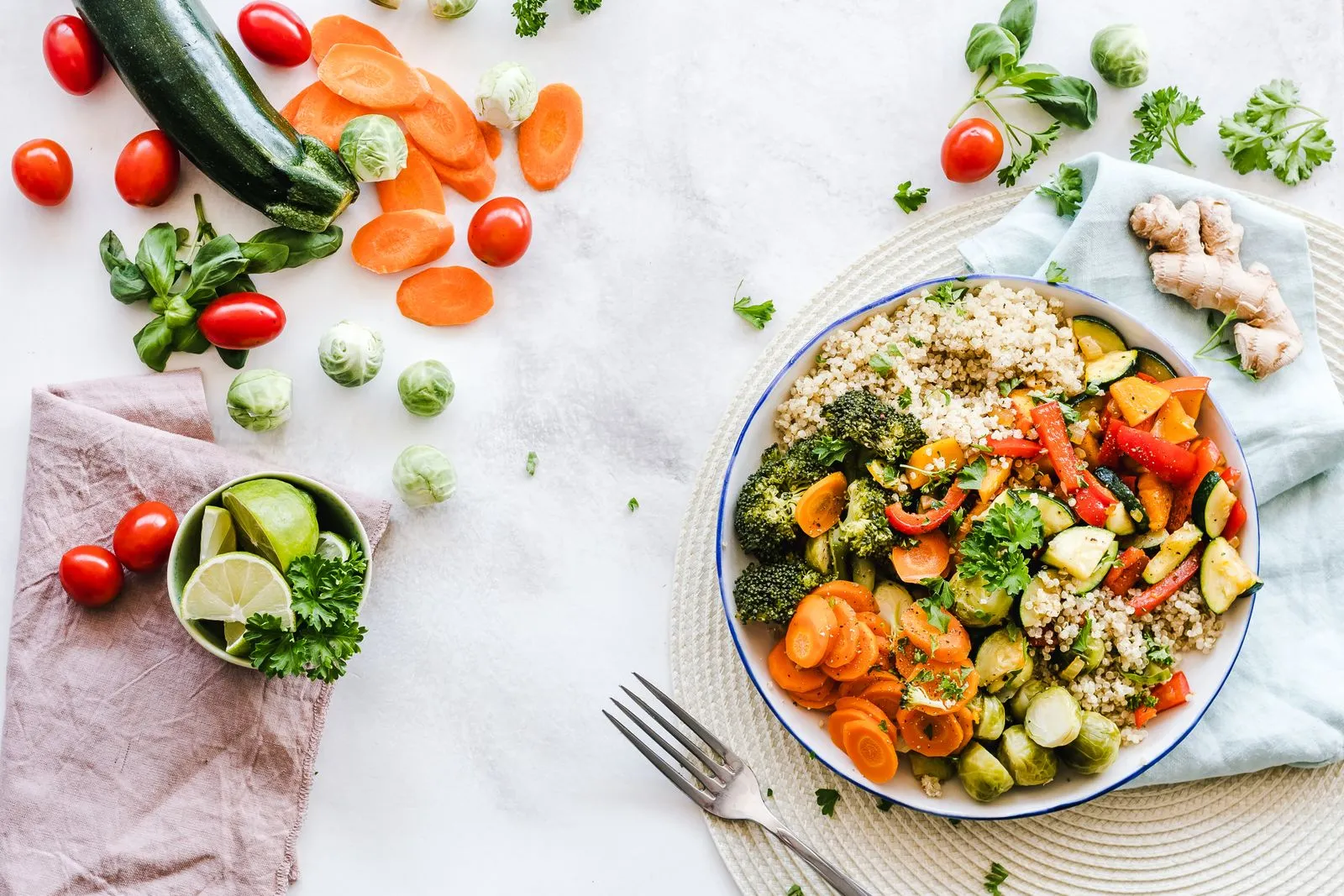
A tin of chickpeas, a handful of frozen peas run under the hot tap, a pouch of microwave rice, a spoon of yoghurt, some lemon and salt. Four minutes, one bowl, and nutritionally it holds its own against anything you would have cooked.
You do not need to buy anything special#
Rujuta Diwekar has spent two decades as one of India's best known nutritionists, working with people from film actors to factory workers, and she has built a following largely by arguing against the food industry that pays for most nutrition advice.
Speaking to Al Jazeera from her home in Mumbai, she put her whole position in one sentence.
There is nothing we need to stay fit, healthy and lose weight that is not available in our kitchen or the local grocery store.
Her broader argument is that the food your grandmother would recognise, grown near you and in season, was doing the job long before anyone sold you a green powder. She is not romanticising the past. She is pointing out that the useful stuff is cheap and nearby.
Why it works. Every extra requirement is a place the plan can fail. A meal that needs a speciality ingredient fails on the evening the shop is shut. A meal built from what your corner store already stocks does not have that failure mode.
How you apply it at a desk. Before you buy anything, write down the five things you would eat most weeks if they were in the cupboard. Buy those, in quantity. That list is your actual diet, and improving it beats replacing it with someone else's.
The seven words worth more than most nutrition books#
Michael Pollan opened his 2007 New York Times Magazine essay "Unhappy Meals" with what he called the short answer to the whole complicated question of what humans should eat.
Eat food. Not too much. Mostly plants.
The essay it introduces is a long, careful argument about why breaking food down into nutrients led us somewhere strange. But the seven words are the part that survives, and they survive precisely because they are short enough to use while tired.
Why it works. A rule you can remember at 8:40pm is worth more than a rule that is more accurate and requires an app. Complexity is not free; it is paid for out of the same attention your job has already spent.
How you apply it at a desk. Use it as a check, not a diet. Look at what you are about to eat and ask whether a reasonable person would call it food, whether the portion is sane, and whether there is a plant in it. Two out of three on a Tuesday is fine.
Variety beats virtue, and the target is a number#
Tim Spector is professor of genetic epidemiology at King's College London and one of the most cited scientists working on the gut microbiome. His practical advice has narrowed over the years to a single number: thirty different plants a week.
The point is variety rather than quantity. Thirty portions of kale does not count. Thirty different plants does, and a plant here includes nuts, seeds, herbs, spices, wholegrains and pulses, not only vegetables and fruit. A mixed bag of frozen vegetables is four or five in one go. A jar of mixed herbs is several.
Why it works. Different plants carry different fibres and different plant compounds, and the bacteria in your gut are specialised. Feeding thirty of them beats feeding the same three very well, which is the underlying finding this recommendation grew out of.
How you apply it at a desk. Count once, out of curiosity, over a week. Most desk workers land somewhere between eight and fifteen and are surprised. Then close the gap the lazy way: a mixed frozen vegetable bag, a bag of mixed nuts, a tin of mixed beans, and herbs and spices used with a heavy hand.
Frozen is not the compromise you think it is#
The quiet assumption underneath "I have no time to cook" is that the good version involves fresh produce, and the freezer aisle is what you settle for. The evidence does not support that hierarchy.
Researchers at the University of California, Davis, ran the comparison properly in 2015. Ali Bouzari, Dirk Holstege and Diane Barrett measured vitamin content in eight fruits and vegetables, including broccoli, spinach, peas, carrots and blueberries, comparing frozen samples against fresh ones stored in a refrigerator the way a household would store them.
For vitamin C, five of the eight showed no significant difference and three were higher frozen. Vitamin E came out better in the frozen samples. A companion paper found minerals, fibre and total phenolics were largely well conserved in the frozen produce. Beta-carotene was the exception and dropped in some items.
Why it works. Vegetables for freezing are picked ripe and frozen within hours. Fresh produce is picked early, travels, sits on a shelf, then sits in your fridge for another five days losing nutrients the whole time. The frozen version stopped the clock at the good moment.
How you apply it at a desk. Fill the freezer without guilt. Frozen spinach, peas, mixed vegetables, and berries turn a four-minute assembly into a meal with real vegetables in it. They also do not rot, which removes the other reason busy people stop buying vegetables.
The six-item shelf#
Stock these six categories and you can build a defensible meal in under five minutes, any evening, without a plan.
- A pulse, tinned or pouched. Chickpeas, black beans, kidney beans, brown lentils. Drain, rinse, done. This is your protein and most of your fibre and it costs less than a coffee.
- Frozen vegetables, at least two kinds. Peas and spinach are the highest-value pair: peas add sweetness and protein, spinach wilts into anything in thirty seconds under hot water or in a pan.
- A pre-cooked grain. Microwave rice, quinoa or grain pouches, or a batch of anything you cooked on Sunday. Ninety seconds and the base of the bowl exists.
- A fast protein for the days pulses will not do. Eggs, tinned fish, or a tub of yoghurt or paneer. Eggs are the fastest hot protein in any kitchen, at about three minutes.
- Fat and crunch. Olive oil, nuts, seeds. A spoon of oil and a scattering of toasted nuts is what separates a bowl you will eat again from a sad one you will not.
- Something sharp. Lemon, vinegar, pickle, hot sauce, yoghurt. This is the item people skip and it is the one that makes assembly taste like cooking. Acid does the work that time usually does.
Pick one from each line, put them in a bowl, season properly. That is dinner. Repeat with different tins and it stops being repetitive long before you get bored.
What trips people up#
Buying fresh food you intend to cook later. The bag of spinach that liquefies on Thursday is the most common form of this failure. Buy for the week you are having, not the week you hope to have, and let the freezer hold the ambition.
Under-seasoning and blaming the food. Assembled meals fail on flavour, not nutrition. Salt properly, add acid, use more herbs and spices than feels correct. A dull bowl gets abandoned within a fortnight regardless of how good it was for you.
Waiting for the shopping trip that fixes everything. Nobody has that Sunday. Add two items from the six-item list to whatever shop you were doing anyway, and the shelf builds itself in three weeks.
Treating a delivery as a failure. It is a meal. The plan here is to move the average, not to achieve a clean record. Assembling four dinners a week instead of none is a large change, and nothing about it requires you to be perfect.
This is general guidance for healthy adults. If you have diabetes, kidney disease, coeliac disease, a food allergy, are pregnant, or are being treated for an eating disorder, take dietary changes to a doctor or registered dietitian who knows your history.
Common questions
Are frozen vegetables as good as fresh?
Largely yes. A 2015 University of California, Davis study comparing eight fruits and vegetables found vitamin C was equal or higher in the frozen samples, vitamin E was higher frozen, and minerals, fibre and phenolics were well conserved. Beta-carotene was the exception. Produce for freezing is picked ripe and frozen within hours, while fresh produce loses nutrients in transit and in your fridge.
Is tinned food unhealthy?
Tinned pulses, tomatoes and fish are among the most useful things in a busy kitchen. Rinse tinned beans to cut the salt, and choose fish in oil or water rather than heavy sauces. Tim Spector counts tinned and jarred plants toward his thirty-plants-a-week target for exactly this reason.
What is the thirty plants a week idea?
It is a variety target rather than a quantity one: thirty different plants across a week, counting nuts, seeds, wholegrains, pulses, herbs and spices alongside fruit and vegetables. Mixed bags do a lot of the work, since one frozen vegetable mix can contribute four or five.
How long does an assembled meal take?
Four to five minutes for most combinations, and about ninety seconds of that is the microwave doing the grain. The only heat involved is optional, which is what makes it survive an evening when cooking is out of the question.
Is meal prepping a better answer?
It is a good answer if you reliably get a free hour at the weekend. Assembly is the fallback for the weeks you do not, and it needs no planning at all. Most people do best with both: a batch of grains on Sunday, and a stocked shelf for when Sunday disappears.
Tools that make this stick
Where an expert named a specific tool, that is noted. The rest are practical options, and at least one of them is always free.
Free, non-commercial nutrition guidance from the Harvard T.H. Chan School of Public Health.
When you want to check a claim about food, this is written by researchers with nothing to sell. Useful precisely because most nutrition content you meet is attached to a product.
- ZOE's guide to thirty plants a weekFree to read
The free explainer behind the variety target, including what counts as a plant and how to bump the number without cooking.
It is the clearest statement of the idea, from the company Tim Spector co-founded. Worth knowing they also sell tests and supplements, so read the free guidance and ignore the rest.
- Open Food FactsFree and open source
A non-profit open database of over four million food products, searchable by barcode from a free app.
Assembly leans on packaged food, and the label is where tinned beans in brine diverge from tinned beans in sugar. Scanning takes two seconds and answers the only question that matters in the aisle.
Your one move today
Open a food delivery app, and instead of ordering, add one tin of chickpeas, one bag of frozen peas and one pouch of rice to a grocery order. Three items, about the price of one delivery, and tomorrow evening has an answer.
Next in this series
2What is a simple rule for building a balanced lunch?Chapter 2 answers the next question, which is what to put in that bowl and in what proportions, using a rule you can check with a glance instead of an app.New chapters go up as they are written. If you would rather not have to remember to come back, the homepage lists every series in order, so you can pick up wherever you left off.
Sources
Every quote on this page was checked against its original source before publishing.
- Rujuta Diwekar - interview on seasonal, local and traditional eating, Al Jazeera View source
- Michael Pollan - "Unhappy Meals", The New York Times Magazine, 28 January 2007, archived on the author's site View source
- Professor Tim Spector - genetic epidemiologist, King's College London; the thirty-plants-a-week variety target and guidance on frozen, tinned and jarred plants View source
- Bouzari, Holstege and Barrett, 2015 - Vitamin Retention in Eight Fruits and Vegetables: A Comparison of Refrigerated and Frozen Storage, Journal of Agricultural and Food Chemistry, University of California, Davis View source
- Bouzari, Holstege and Barrett, 2015 - companion paper on mineral, fibre and total phenolic retention in the same eight fruits and vegetables View source