What tiny food swaps make the biggest difference?
Four, in order of size: sugary drink to water or unsweetened tea, refined grain to wholegrain, crisps to nuts, and dessert to yoghurt with fruit. A 120,000-person Harvard study tracked exactly these foods over twenty years and found each shifted long-term weight in a measurable direction. None of them requires a recipe.
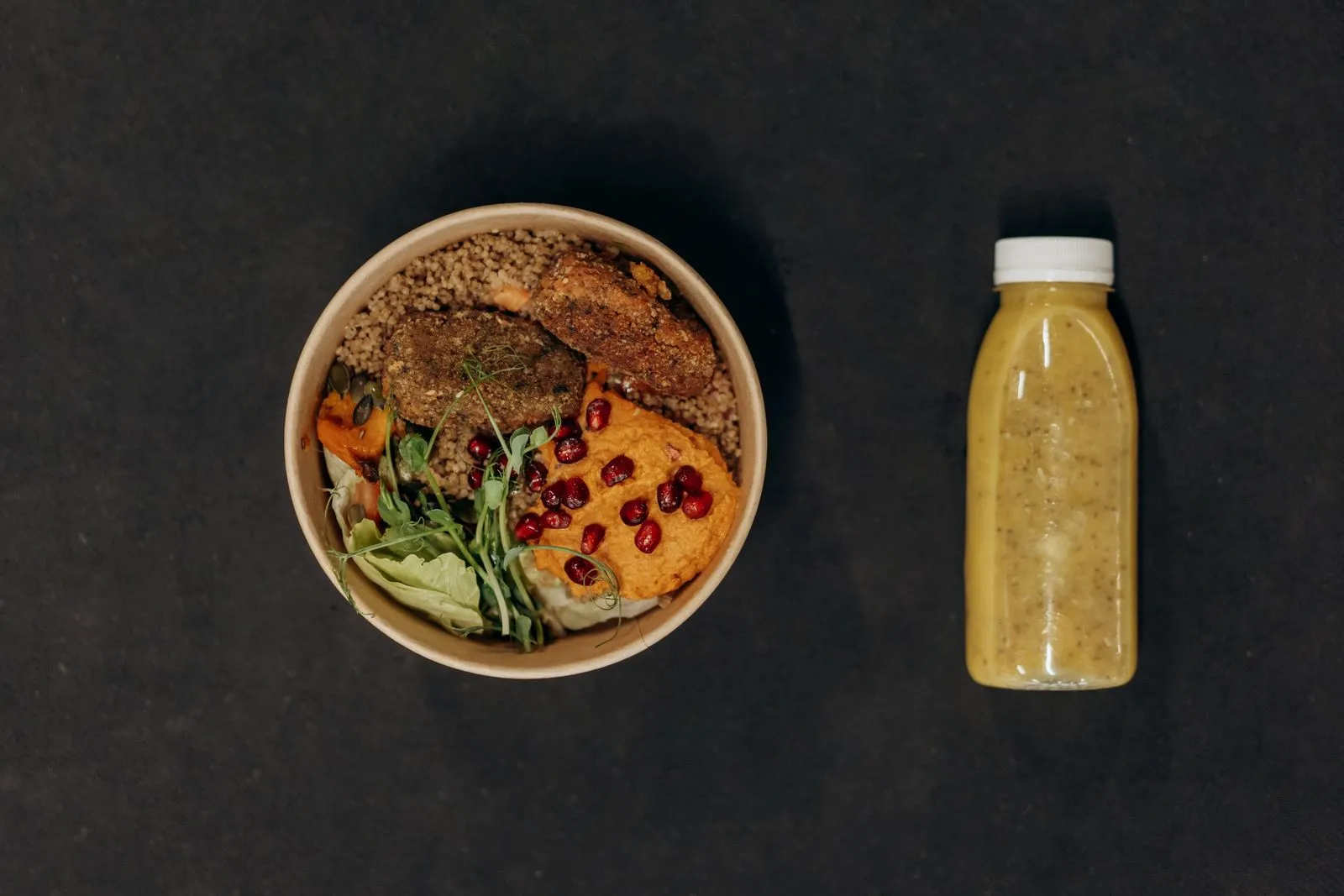
A swap is different from a diet in one important way: nothing is taken away. You still have a drink at eleven, a snack at three, and something sweet after dinner. Only the contents change.
That matters because willpower is a limited resource and yours is already committed elsewhere. A change that needs a decision every time will not survive a bad month. A change you make once, in a shop, survives indefinitely.
Chapters 1 and 2 covered what to build and in what proportions. This one is the smallest possible intervention, for the weeks when the other two are too much.
The study that ranks the swaps for you#
In 2011 Dariush Mozaffarian and colleagues at Harvard published a study in the New England Journal of Medicine that is unusually useful for anyone deciding what to change first.
They followed 120,877 American women and men across three long-running cohorts, none obese or chronically ill at the start, and tracked what happened to their weight over periods of up to twenty years. Rather than comparing diets, they asked a narrower question: if a person eats one more serving a day of a particular food, what happens to their weight over the following four years?
The answers, per additional daily serving over four years, were specific. Potato crisps came out worst at 1.69 pounds, followed by potatoes at 1.28, sugar-sweetened drinks at 1.00, unprocessed red meat at 0.95 and processed meat at 0.93. In the other direction: vegetables at minus 0.22 pounds, wholegrains at minus 0.37, fruit at minus 0.49, nuts at minus 0.57, and yoghurt at minus 0.82.
Why it works. These are observational associations across a population, not a controlled trial, so they describe what tends to happen rather than what a given food does to you. But the ranking is consistent, the sample is enormous, and the direction of travel is what you need in a supermarket aisle.
How you apply it at a desk. Read the two lists as a swap table. The four swaps below are simply the biggest items on the left traded for the biggest items on the right, and yoghurt against crisps is the single largest gap in the whole dataset.
Why the swap has to be a swap, not a removal#
Theresa Marteau directs the Behaviour and Health Research Unit at the University of Cambridge, and her research programme has a specific target: interventions that work without requiring anyone to try harder.
Her argument, developed across a long series of papers on what is often called choice architecture, is that changing the small physical environments people move through has more potential across a population than information and persuasion aimed at individuals. Portion sizes, glass sizes, what is at eye level, what is within reach. Her later work is careful about the limits of this too, noting that the evidence base for many of these interventions is thinner than their popularity suggests.
Why it works. Most eating decisions are not decisions. They are responses to what is available at the moment hunger arrives. Change what is available and you change the outcome without ever engaging the part of you that is tired and negotiating.
How you apply it at a desk. Do the swap at the shop, not at the desk. If the crisps are not in the drawer, the crisps do not need to be resisted at 3pm. Put the nuts where the crisps were, and the fruit where you will see it. The whole intervention is a shelf, not a decision.
The drink swap, and why it is first#
Susan Jebb is professor of diet and population health at the University of Oxford and has spent years studying how the food environment shapes what people eat. Her description of that environment is memorable.
People are assaulted by food at every turn.
Sugary drinks are the purest example. They arrive with meals by default, they carry a meaningful number of calories, and because they are liquid the body registers them poorly compared with the same energy eaten as food.
Why it works. A drink swap is the cleanest change available because there is no adjustment period for taste and no loss of volume. You still have a cold drink at your desk. It simply stops carrying the calories of a small meal.
How you apply it at a desk. Sparkling water with lemon, unsweetened iced tea, or plain water in a glass you like. If you drink several sugary drinks a day, halve it rather than stopping, because the swap that sticks beats the swap that is heroic for nine days.
The grain swap, and what the number is#
The wholegrain swap has the strongest evidence of the four and the smallest effort attached to it.
A 2016 dose-response meta-analysis in The BMJ, led by Dagfinn Aune, pooled 45 studies covering around 700,000 participants. Increasing wholegrain intake to about 90 grams a day, which is roughly three servings, was associated with lower risk of coronary heart disease and cardiovascular disease, and lower mortality from several causes. The risk reductions continued in the dose-response analysis up to 225 grams a day.
Why it works. Refining a grain removes the bran and the germ, which is where most of the fibre, the minerals and the plant compounds live. What is left arrives in your bloodstream faster and does less on the way through.
How you apply it at a desk. Three servings a day is a sandwich in wholegrain bread, porridge instead of a cereal that lists sugar second, and brown rice or whole wheat pasta at dinner. You are not adding a food. You are buying a different version of one you already eat.
Why nuts beat crisps by so much#
The crisps-to-nuts swap looks like a straight trade of one salty handful for another, and it is worth knowing why the data separates them so widely when the calories are broadly comparable.
Three things differ. Nuts carry protein and fibre, so they register as food and blunt the next hunger signal, while a crisp is starch and fat with neither. Nuts need real chewing, which slows the eating down and gives fullness time to arrive. And a meaningful share of the fat in whole nuts is not fully absorbed, because it stays locked inside the cell walls that survive chewing.
Why it works. A snack that is hard to eat quickly and leaves you less hungry afterwards has a very different effect on a day than one designed to be eaten without noticing. That design difference is the point rather than the calorie count.
How you apply it at a desk. Whole nuts beat nut butter and nut bars for this reason. Almonds, walnuts and pistachios in shells are the slowest of all, and slow is the feature you are buying.
The swaps that are not worth the effort#
Two things commonly sold as swaps do not earn a place, and skipping them saves you money and attention.
Fruit juice for fizzy drinks. The sugar content is broadly similar and the fibre that made the fruit worth eating is gone. This is a lateral move dressed as an improvement. Eat the fruit and drink the water.
Anything marketed as a superfood. Powders, shots and speciality seeds cost more than the swaps above and do less. Nothing in the Harvard ranking is exotic, which is the useful part of it: the foods that moved the numbers are in every ordinary supermarket.
The four swaps#
In order of size. Do one at a time, and give each about a fortnight before adding the next.
- Sugary drink to water, sparkling water or unsweetened tea. The biggest liquid change available and the one with no taste adaptation required for most people. Keep it cold and keep it within reach.
- Refined grain to wholegrain. Bread, rice, pasta, breakfast cereal. Buy the wholegrain version once and the swap is permanent, because you will not go back to the shop specially for white bread.
- Crisps to nuts. The two ends of the Harvard ranking, a gap of over two pounds per daily serving across four years. Buy unsalted or lightly salted, decant into a small container, and keep the bag out of arm's reach.
- Dessert to yoghurt with fruit. Yoghurt was the food most strongly associated with lower weight gain in the whole study. Plain yoghurt, fruit for sweetness, and a few nuts, which also quietly adds to your plant count from Chapter 1.
- Then change where things live. Nuts and fruit at eye level, crisps and biscuits somewhere inconvenient or absent. This is the step that makes the other four automatic instead of effortful.
Four swaps, done at the shop, that require nothing of you during a working day. That is the whole chapter.
What trips people up#
Doing all four at once. Four simultaneous changes feel like a diet, and diets end. One swap at a time, held for two weeks, produces four permanent changes in two months, which is faster than the alternative because the alternative usually stops.
Swapping to a diet version rather than a food. A low fat biscuit is still a biscuit and it will not fill you. The swaps that worked in the Harvard data were foods, not lighter versions of the thing being replaced.
Treating nuts as unlimited. They came out well in the study at ordinary serving sizes. A small handful, decanted, is the portion. Eating from the bag while working is how a good swap turns into an accidental second dinner.
Relying on willpower at the desk. This is the failure Marteau's whole research programme is aimed at. If the swap requires you to decide correctly at 3pm on a bad day, it is not a swap yet. Move it upstream to the shopping list.
These are general patterns from population research, not personal prescriptions. If you have diabetes, a nut allergy, kidney disease, are pregnant, or are being treated for an eating disorder, discuss dietary changes with a doctor or registered dietitian first.
Common questions
Which food swap makes the biggest difference?
On the Harvard data, swapping potato crisps for yoghurt or nuts spans the widest gap in the whole study: crisps were associated with 1.69 pounds gained per extra daily serving over four years, yoghurt with 0.82 pounds lost. In practice, most desk workers get the fastest change from dropping sugary drinks.
How much wholegrain should I eat?
The 2016 BMJ meta-analysis led by Dagfinn Aune found benefits up to about 90 grams a day, roughly three servings, with risk reductions continuing further in the dose-response analysis. Three servings is achievable as wholegrain bread, porridge and brown rice or whole wheat pasta.
Do I have to give up crisps and dessert completely?
No. This chapter is about swaps, not removal, and nothing here says never. The aim is to move the average across a week. A packet of crisps on Friday inside a week of nuts is not a problem worth thinking about.
Why do swaps work better than dieting?
Because they do not require a decision when you are tired. Theresa Marteau's research at Cambridge focuses on changing the small environments people move through rather than persuading individuals, on the grounds that most eating is a response to what is available rather than a considered choice.
Are diet soft drinks a good swap?
They remove the sugar, which is the main issue with the drink they replace, and for someone drinking several sugary drinks a day they are a reasonable step. Water, sparkling water and unsweetened tea remain the simplest destination, and cost nothing.
Tools that make this stick
Where an expert named a specific tool, that is noted. The rest are practical options, and at least one of them is always free.
The swap decided once, in writing, before you are anywhere near food.
Every swap in this chapter is made at the shop and none at the desk. A saved online basket is better still, because the swap then repeats itself weekly without you being involved.
- Open Food FactsFree and open source
A non-profit open food database with a free barcode scanner app.
Wholegrain claims on packaging are loose, and "made with wholegrains" can mean very little. Scanning tells you what proportion of the loaf is wholegrain before you commit to it for the week.
- A small lidded container for nutsFree if you own a jar
Any small jar or box that holds roughly a handful.
The nuts swap fails on portion, not on principle. Decanting once a week turns an unlimited bag into a defined snack, which is the difference between the version that worked in the research and the version that does not.
- A refillable water bottle you likeFree to a few pounds
One bottle, kept on the desk, refilled at a tap.
The drink swap works on availability. A bottle already full and within reach beats a jug in a kitchen two floors away, and it doubles as the cue for getting up, which Chapter 1 of the Fitness series is built on.
Your one move today
Pick one swap, and make it on your next grocery order rather than at your desk. Wholegrain bread instead of white is the easiest place to start, because it is one tick box and you will not notice it again after a week.
New chapters go up as they are written. If you would rather not have to remember to come back, the homepage lists every series in order, so you can pick up wherever you left off.
Sources
Every quote on this page was checked against its original source before publishing.
- Mozaffarian, Hao, Rimm, Willett and Hu, 2011 - Changes in Diet and Lifestyle and Long-Term Weight Gain in Women and Men, New England Journal of Medicine 364(25):2392-2404, following 120,877 people View source
- Aune et al., 2016 - Whole grain consumption and risk of cardiovascular disease, cancer, and all cause and cause specific mortality: systematic review and dose-response meta-analysis, The BMJ View source
- Professor Theresa Marteau - Beyond choice architecture: advancing the science of changing behaviour at scale, BMC Public Health 2021, Behaviour and Health Research Unit, University of Cambridge View source
- Professor Susan Jebb - on the modern food environment, Research in Conversation, University of Oxford View source