How do I make a vegetarian lunch that keeps me full?
Build it around a pulse. A meta-analysis of feeding trials found people reported about 31 percent greater fullness after a serving of pulses compared with a control meal. Add a wholegrain, a spoon of fat and a large volume of vegetables, and the lunch holds until dinner without any animal protein in it.
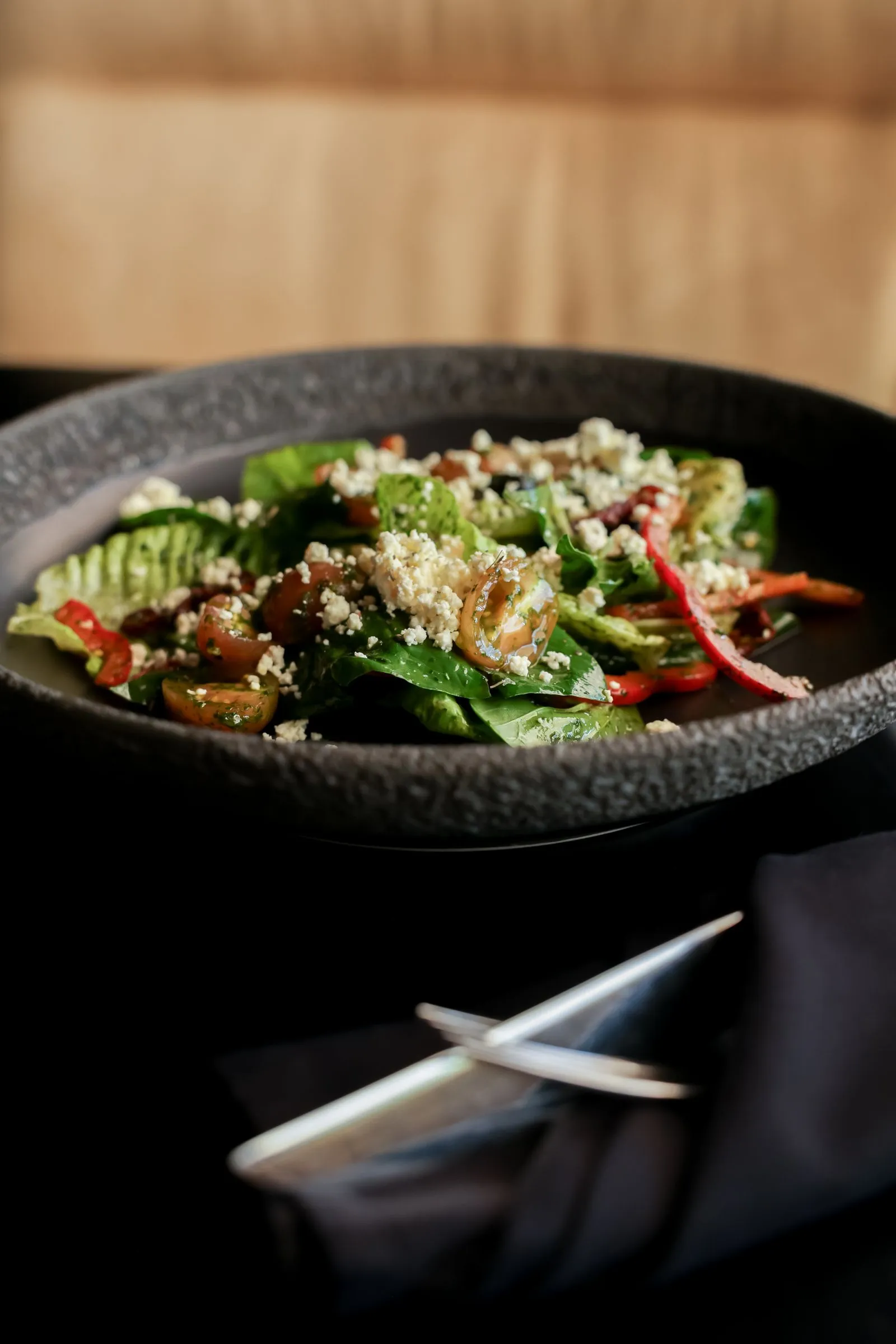
The complaint is always the same. The vegetarian lunch was lovely, it was colourful, it had four kinds of vegetable in it, and by half past three you are standing in front of the biscuits with no memory of having decided to walk there.
This is not a failure of vegetarianism. It is a failure of composition, and it is fixable with one ingredient category and about ninety seconds of thought.
Chapter 2 of the Healthy Food series gave you the plate rule: half vegetables, a quarter protein, a quarter wholegrain. This chapter is about the quarter that vegetarian lunches most often leave empty, and what happens to your afternoon when you fill it.
Why the colourful lunch fails#
A salad, a wrap of grilled vegetables, a soup, a bowl of rice with a vegetable side. These are the standard vegetarian desk lunches and they share a structural problem: they are mostly water, fibre and starch, and almost no protein or fat.
Vegetables give you volume, which fills your stomach. Volume alone empties quickly. What keeps hunger away for four hours is a combination of how slowly the meal leaves your stomach, how gradually its carbohydrate arrives in your blood, and the hormonal signals that protein and fat trigger. A vegetable-only lunch scores well on the first mechanism and poorly on the rest.
The good news is that one food category covers all of them at once, and it is the cheapest thing in the shop.
The pulse finding, with a number attached#
In 2014 a research team including Siying Li, Cyril Kendall and Russell de Souza, working within the nutrition research group at the University of Toronto, published a systematic review and meta-analysis in the journal Obesity. They pooled nine acute feeding trials and asked a narrow question: what happens to reported fullness after a meal containing pulses.
The answer was a roughly 31 percent greater satiety response, following an average serving of around 160 grams of pulses, which is about one standard tin drained. Pulses here means beans, chickpeas, lentils and dried peas.
Why it works. A pulse is an unusually complete package: protein, soluble fibre, and starch that is slow to break down, all inside a cell structure that resists digestion. The meal leaves your stomach slowly and arrives in your bloodstream gradually, which is exactly the profile that keeps hunger flat.
How you apply it at a desk. One tin, drained, is the unit. Chickpeas in a salad, rajma or black beans in a wrap, a scoop of dal alongside rice, lentils stirred through a grain bowl. If your vegetarian lunch contains no pulse, that is the first thing to change and it costs less than a pound.
The effect that carries into your next meal#
There is a second, stranger benefit to lentils at lunch, and it was first described by David Jenkins, the University of Toronto researcher who also gave us the glycaemic index.
In work published in 1982, his group showed that a slow-release carbohydrate meal improved glucose tolerance at the meal after it. The phenomenon became known as the second-meal effect, and it has held up in later research: whole grains or legumes at breakfast lower the blood sugar response at lunch and dinner, and a lentil dinner lowers it again the following morning.
Later work has tested individual pulses head to head against white bread, measuring both the blood sugar response and appetite at a fixed meal two hours later. The pulses lowered the glucose response to that later meal, and lentils were the standout for appetite.
Why it works. Part of it is that slowly digested carbohydrate is still arriving hours later, so you are not starting the next meal from a low. Part of it appears to involve fermentation of the fibre in the large intestine and the compounds that produces. Both mechanisms outlast the meal itself.
How you apply it at a desk. A dal or bean lunch is doing work on your evening as well as your afternoon. If your problem is not 3pm but the ravenous grazing that starts the moment you get home, this is the lever, and it is pulled at lunchtime.
The Indian kitchen already solved this#
It is worth noticing that the structure this chapter is arguing for describes a large share of traditional Indian vegetarian eating, and has for a very long time.
Nandita Iyer, a Bengaluru-based doctor with a specialisation in nutrition who has written on vegetarian food for over a decade, works almost entirely in this territory: everyday ingredients from an Indian kitchen, and myth-correction about what vegetarian eating does and does not lack.
Dal with rice, rajma with roti, chana with a vegetable sabzi, idli with sambar. Each is a pulse plus a wholegrain plus vegetables plus a fat, assembled without anyone consulting a macro calculator. The structure is old; only the explanation is new.
Why it works. Pulse and grain together provide a fuller spread of amino acids than either does alone, and the fat in the tempering slows the whole meal down while making the vegetables worth eating. It is the plate rule, arrived at by several centuries of cooking rather than by a committee.
How you apply it at a desk. If a food culture near you already does pulse plus grain as a default meal, borrow its template rather than inventing one. Dal and rice, beans and tortilla, hummus and pitta, lentil soup and bread all do the same job, and all of them travel in a lunchbox.
The fat that nobody packs#
One more component, and it is the one most often stripped out of a lunch that is trying to be healthy.
Fat slows gastric emptying, which is the mechanical part of staying full. It also carries flavour, and a lunch that tastes of nothing is a lunch that gets supplemented by something from the vending machine regardless of its nutritional credentials.
Why it works. A spoonful of oil, a scattering of nuts or seeds, some avocado, a little cheese or a dollop of yoghurt does two jobs at once. It extends the meal and it makes the vegetables palatable enough that you will eat the volume the plan depends on.
How you apply it at a desk. Add one visible fat to every vegetarian lunch, deliberately. Olive oil over the bowl, toasted peanuts on the salad, a tempering of ghee or oil with cumin over dal. This is not the indulgent part of the meal. It is a working component.
The four-part vegetarian lunch#
Not a recipe. A structure, which you fill with whatever is in the house.
- One pulse, about a tin drained or a good ladle of dal. Chickpeas, black beans, rajma, brown or red lentils, black-eyed peas, or a scoop of any dal you cooked earlier in the week. This is the component the meta-analysis is about and it is not optional.
- One wholegrain, about a fist. Brown rice, roti, wholegrain bread, quinoa, whole wheat pasta, or leftover grains. Pulse and grain together cover the amino acid spread without any need to plan combinations.
- Vegetables, as much volume as the container will hold. Raw, roasted, frozen and steamed, or cooked into the dal. Volume is the part vegetarian lunches usually get right, so keep doing it.
- One visible fat. A spoon of olive oil, a handful of peanuts or seeds, some paneer, a spoon of yoghurt, or a proper tempering. Add it on purpose rather than hoping it turns up.
- Then season like you mean it. Salt, acid, chilli, herbs. Undersalted vegetarian food is the single most common reason a good lunch plan is abandoned in week two.
Filled in, that is a chickpea and roasted vegetable bowl with brown rice and olive oil, or dal with rice and a sabzi and a tempering, or a rajma wrap with salad and yoghurt. Same structure, three different lunches, none of which needs a recipe.
What trips people up#
Counting paneer or cheese as the whole protein quarter. They are useful and they are mostly fat with some protein. A cube or two on top of a vegetable dish is a garnish. If cheese is your only protein, the lunch is closer to the failing version than the working one.
Buying the salad and skipping the pulse. A shop-bought vegetarian salad usually contains under ten grams of protein and no pulse at all. Adding a small tin of chickpeas or a pot of hummus to it takes it from a snack to a meal.
Worrying about combining proteins at every meal. This idea was current in the 1970s and has since been set aside. You do not need to pair specific foods within a single meal. Eating a variety of plant proteins across the day is what matters, which Chapter 2 covers properly.
Going straight from no pulses to three tins a day. A large jump in fibre is uncomfortable and people quit over it rather than over the food. Build up across a fortnight, rinse tinned pulses well, and it settles.
If you have irritable bowel syndrome, are on a low-FODMAP plan, or have a diagnosed digestive condition, pulses may need introducing carefully or in specific forms. A registered dietitian can tell you which ones and how much, rather than you working it out by trial and discomfort.
Common questions
Why am I hungry an hour after a vegetarian lunch?
Usually because the meal was mostly vegetables and starch with very little protein or fat. Vegetables give volume, which empties from the stomach quickly. Adding a pulse and a visible fat changes how slowly the meal leaves your stomach and how gradually its carbohydrate reaches your blood.
How much pulse do I need in a lunch?
About a drained tin, roughly 160 grams, which is close to the average serving in the 2014 meta-analysis that found around 31 percent greater reported fullness. A good ladle of dal is a similar amount.
Do I need to combine proteins in the same meal?
No. The food-combining idea was set aside decades ago. Every plant food that provides protein contains all the essential amino acids, in differing proportions, and the body draws on its own pool across the day. Eat a variety of plant proteins over a day rather than engineering each plate.
Is paneer enough protein for a vegetarian lunch?
A decent portion contributes real protein, but the amount most people add is a garnish sitting on a vegetable dish. Treat paneer as one option among several rather than the default, and build the meal on a pulse when you can.
What is the second-meal effect?
The finding, first described by David Jenkins in 1982, that a slowly digested carbohydrate meal improves your blood sugar response at the following meal. Legumes at lunch measurably flatten the response to dinner, so a dal lunch is working on your evening as well as your afternoon.
Tools that make this stick
Where an expert named a specific tool, that is noted. The rest are practical options, and at least one of them is always free.
- A tin opener and four tinsAround a pound or a dollar per tin
Chickpeas, black beans, kidney beans and brown lentils, kept where you can see them.
This chapter has exactly one required ingredient and it costs about a pound a meal. Four tins in a cupboard is the whole intervention, and the tin does not care how tired you were when you bought it.
Harvard T.H. Chan School of Public Health guidance on protein sources, including plant proteins.
A non-commercial reference for how much protein each vegetarian food delivers, which is the number most recipe sites quietly leave out.
- Saffron TrailFree
Nandita Iyer's long-running vegetarian food and nutrition site, written from an Indian kitchen.
Most vegetarian meal advice online is written around Western ingredients. This is the pulse-plus-grain structure in its native form, from a doctor with a nutrition specialisation rather than a recipe developer.
- A 900ml lunch containerUnder the price of two bought lunches
One box big enough to hold the vegetable volume this lunch depends on.
Vegetarian lunches lose their volume advantage when they are packed into something small. A larger box is a surprisingly effective intervention, because you fill the space you are given.
Your one move today
Put one tin of chickpeas in your bag or your desk drawer today. Tomorrow, open it, rinse it, and tip it into whatever lunch you were already going to have. That single addition is most of what this chapter is about.
Next in this series
2What are the best plant-based protein sources for a vegetarian desk worker?Chapter 2 takes the protein question head on: which vegetarian sources are worth building meals around, how much you need, and the two nutrients a vegetarian diet does have to plan for.New chapters go up as they are written. If you would rather not have to remember to come back, the homepage lists every series in order, so you can pick up wherever you left off.
Sources
Every quote on this page was checked against its original source before publishing.
- Li, Kendall, de Souza et al., 2014 - Dietary pulses, satiety and food intake: a systematic review and meta-analysis of acute feeding trials, Obesity View source
- Higgins, 2012 - Whole grains, legumes and the subsequent meal effect: implications for blood glucose control, Journal of Nutrition and Metabolism, reviewing the second-meal effect first described by Jenkins in 1982 View source
- Mollard et al., 2014 - Second-meal effects of pulses on blood glucose and subjective appetite following a standardized meal two hours later, Applied Physiology, Nutrition, and Metabolism View source
- Dr Nandita Iyer - doctor with a nutrition specialisation and author of The Everyday Healthy Vegetarian, writing at Saffron Trail View source