Is red meat okay to eat regularly, or should I limit it?
Unprocessed red meat is fine in moderation. The World Cancer Research Fund suggests keeping it to roughly 350 to 500 grams of cooked weight a week, which is three modest portions. Processed meat is the one to treat differently: the WHO advises there is no known safe level, so eat little if any.
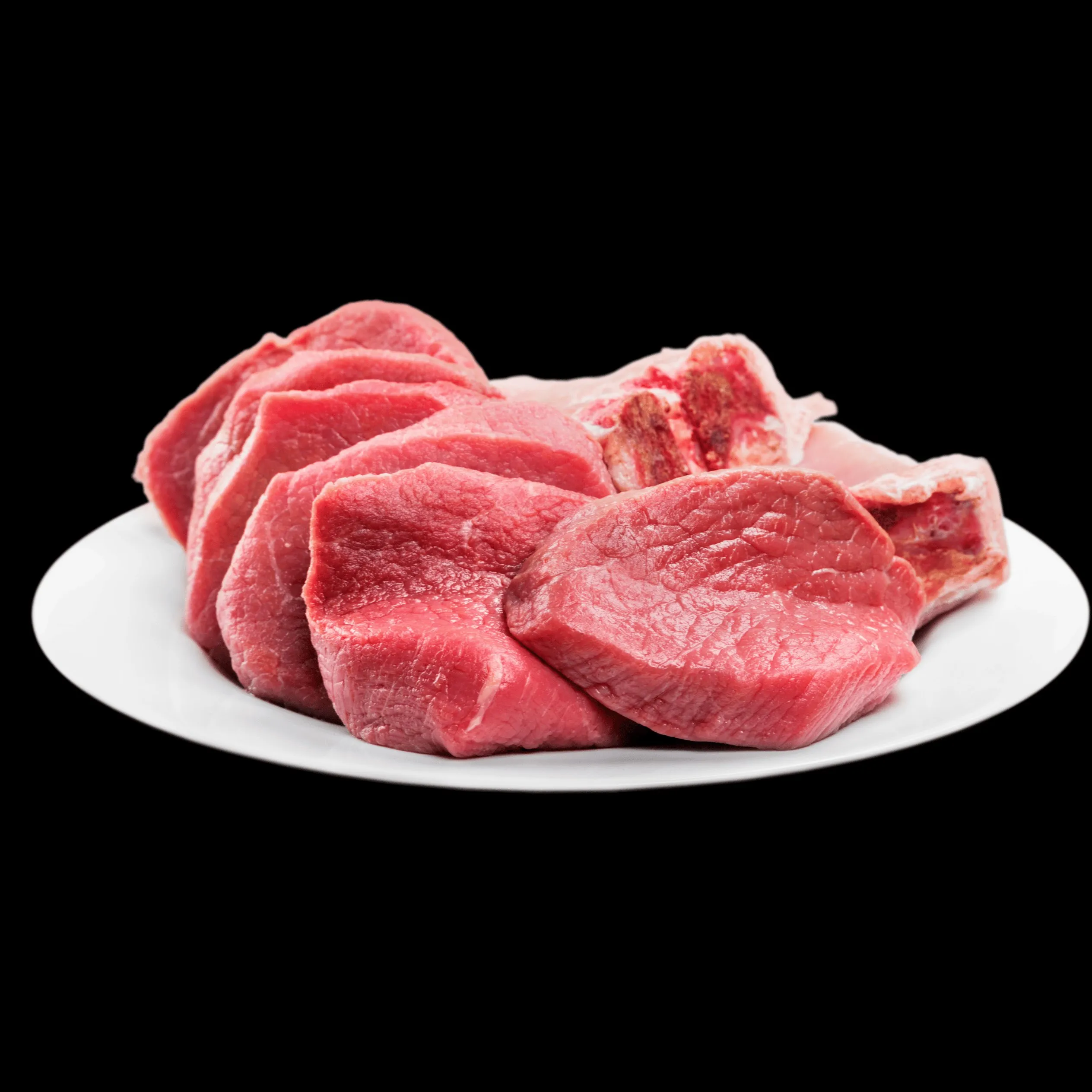
In October 2015 the World Health Organization put processed meat in the same classification group as tobacco smoking and asbestos, and every newspaper in the world ran with it. Bacon causes cancer. The nuance did not survive the headline.
A decade on, most people are still carrying either a vague guilt about a steak or a firm conviction that the whole thing was overblown. Neither is quite right, and the actual position is more useful than either.
This chapter sets out what the evidence says, what the numbers mean in absolute rather than relative terms, and what to do about it on a Wednesday.
What the WHO classified, and what it did not#
The International Agency for Research on Cancer, which is the WHO agency that evaluates this, reached two separate conclusions and they get conflated constantly.
Processed meat was placed in Group 1, carcinogenic to humans, on the basis of sufficient evidence that it causes colorectal cancer. Processed means preserved by smoking, curing, salting or the addition of preservatives: bacon, ham, salami, sausages, hot dogs.
Unprocessed red meat, which is beef, lamb, pork, veal and goat, was placed in Group 2A, probably carcinogenic, on limited evidence in humans plus strong mechanistic evidence. Those are different findings with different strength behind them.
Why it works. The classification is about how confident the evidence is that something can cause cancer, not about how much cancer it causes. The WHO says so explicitly: processed meat sitting in the same group as tobacco does not mean they are equally dangerous.
How you apply it at a desk. Separate the two categories in your head and treat them differently. The bacon sandwich and the Sunday roast are not the same question, and most of the confusion comes from answering them together.
The number, and what it means in absolute terms#
IARC put a figure on it: each 50 gram portion of processed meat eaten daily was associated with an 18 percent increase in the risk of colorectal cancer. Fifty grams is about two rashers of bacon or one hot dog.
Eighteen percent sounds alarming until you ask what it is 18 percent of. That is a relative increase applied to a baseline lifetime risk of colorectal cancer that is somewhere around one in twenty in many Western countries. An 18 percent increase on that baseline moves the absolute risk by roughly one percentage point.
That is a real effect and it is worth acting on. It is also nothing like the effect size of smoking, where the relative risk of lung cancer runs to many multiples rather than a fifth.
Why it works. Relative risk is how epidemiology reports findings and absolute risk is how a person should make a decision. Headlines report the first and almost never the second, which is the entire reason this topic feels more frightening than the evidence supports.
How you apply it at a desk. Treat processed meat as an occasional food rather than a daily one, and stop treating a bacon sandwich on a Saturday as a moral event. The finding is about the daily portion, not the occasional one.
What the cancer prevention bodies recommend#
The World Cancer Research Fund, working with the American Institute for Cancer Research, turns the evidence into an actual instruction, which is more use than a classification.
Their recommendation is to limit red meat to about 350 to 500 grams of cooked weight per week, and to eat little if any processed meat. Their assessment is that processed meat is a convincing cause of colorectal cancer and red meat a probable one.
Three hundred and fifty to five hundred grams a week is not austerity. It is roughly three modest portions: a steak, a portion of mince in a bolognese, and a Sunday roast, with fish, poultry, eggs and pulses filling the rest of the week.
Why it works. A weekly allowance is easier to hold to than a daily rule, because real eating is uneven. One large Sunday meal inside a week of chicken and lentils sits comfortably within the guidance.
How you apply it at a desk. Count portions rather than grams. Three red meat meals a week, and processed meat as something you have occasionally rather than something that lives in the fridge. That is the whole recommendation implemented.
Why processed is the harder line#
It is worth understanding why the two categories are treated so differently, because the mechanism explains the recommendation.
Curing salts, principally nitrites, can form N-nitroso compounds in the gut, and those are the ones with the strongest mechanistic case for damaging the cells lining the colon. Red meat has its own proposed mechanisms, including haem iron and compounds formed when meat is cooked at very high temperatures, but the evidence behind them is weaker, which is exactly why one sits in Group 1 and the other in Group 2A.
Why it works. The difference is not that bacon is red meat plus salt. It is that the preservation process itself introduces the compounds of concern, which is why smoked turkey and chicken sausages fall on the processed side of the line rather than the poultry side.
How you apply it at a desk. Check what you eat regularly. For most desk workers the daily exposure is not steak, it is ham in a sandwich, chorizo in a pasta, or a breakfast sausage. Those are the ones the guidance is about.
What red meat is doing for you#
A chapter that only lists risks gives a distorted picture, so here is the other side.
Red meat is one of the best available sources of haem iron, which is absorbed far more readily than the iron in plants. It carries vitamin B12, which the Veg Food series covers as the nutrient a vegetarian diet has to plan around. It is dense in zinc and in high-quality protein, delivering the 30 gram per meal target from Chapter 1 in a palm-sized portion.
Why it works. For a menstruating woman, a teenager, or anyone who has been told their ferritin is low, red meat is one of the most efficient ways to address it. That has to sit alongside the cancer evidence rather than be crowded out by it.
How you apply it at a desk. Moderation here means moderation, not avoidance. Three portions a week is a recommendation to keep eating it, at a level where the nutritional benefit is banked and the risk stays small.
The practical version#
Five decisions, made once, that put you inside the guidance without any weekly arithmetic.
- Cap red meat at three meals a week. A palm-sized portion each time. That lands you comfortably inside the 350 to 500 gram range without weighing anything.
- Move processed meat off the weekly shop. Not banned, just not a default. The change that matters is the ham in the daily sandwich and the sausage in the weekly fry-up, not the charcuterie on holiday.
- Fill the gap with the rest of this topic. Fish twice a week including one oily, from Chapter 2. Chicken, eggs and prawns for speed. Pulses from the Veg Food series, which do the fibre job that meat cannot.
- Turn the heat down where you can. The compounds formed at very high temperatures are part of the proposed mechanism for red meat, so slower and lower cooking, and not eating the blackened parts, is a sensible free adjustment.
- Keep the fibre up. A high red meat, low fibre diet is the pattern the colorectal evidence is most concerned about. Wholegrains, pulses and vegetables alongside the meat is the version that looks nothing like the risky one.
What trips people up#
Reading Group 1 as "as dangerous as smoking". The WHO addressed this directly in its own question and answer document. The groups describe how certain the evidence is, not how large the risk is. This is the single most common misreading of the 2015 announcement.
Swapping red meat for processed poultry. Smoked turkey slices, chicken sausages and processed deli meats are on the processed side of the line regardless of the animal. Swapping bacon for turkey rashers is not the change you think it is.
Cutting red meat entirely, then not replacing the iron. Dropping red meat without adding pulses, dark greens and vitamin C alongside them is how people end up tired and blaming their job. If you cut it, plan the replacement.
Focusing on the meat and ignoring what is with it. The pattern that shows up in the research is red meat with little fibre. Steak with vegetables and a wholegrain is a different meal from a burger in a white bun with chips, and the evidence is largely about the second.
If you have a family history of bowel cancer, inflammatory bowel disease, or have been advised to modify your diet for a diagnosed condition, take this to your doctor rather than to general guidance. Screening matters more than diet here, and bowel screening programmes exist in most countries for good reason.
Common questions
How much red meat is okay per week?
The World Cancer Research Fund suggests limiting red meat to about 350 to 500 grams of cooked weight per week, which is roughly three modest portions, and eating little if any processed meat. Counting portions is easier than counting grams and lands in the same place.
Is red meat as dangerous as smoking?
No. Processed meat sits in the same IARC classification group as tobacco, but the WHO states explicitly that the groups describe how strong the evidence is that something causes cancer, not how much risk it carries. The effect sizes are not remotely comparable.
What does the 18 percent figure mean?
IARC found that each 50 gram portion of processed meat eaten daily was associated with an 18 percent higher risk of colorectal cancer. That is a relative increase on a baseline lifetime risk of roughly one in twenty, so the absolute change is around one percentage point. Real, worth acting on, and not the same as an 18 percent chance.
What counts as processed meat?
Meat preserved by smoking, curing, salting or the addition of preservatives: bacon, ham, salami, chorizo, sausages and hot dogs. It applies regardless of the animal, so smoked turkey and chicken sausages count too, which surprises people swapping bacon for a poultry version.
Should I stop eating red meat entirely?
The guidance is to limit it, not to eliminate it. Red meat is an efficient source of haem iron, B12, zinc and high-quality protein. If you do cut it, plan the replacement rather than leaving a gap, particularly for iron and B12.
Tools that make this stick
Where an expert named a specific tool, that is noted. The rest are practical options, and at least one of them is always free.
The World Health Organization's own plain-language explanation of the 2015 IARC classification.
This is the document that answers "is it as bad as smoking" directly, from the body that made the classification. Worth reading once instead of a decade of headlines about it.
The evidence page behind the limit on red and processed meat, with the grading of each finding.
Turns the classification into an amount, which is the part you can act on. It also shows which conclusions are graded convincing and which probable, so you can see where the confidence sits.
Three ticks on the fridge, or a repeating note, one per red meat meal.
The guidance is weekly and memory is daily, which is why people under-count. Three marks a week is the entire tracking requirement here, and no app does it better than a magnet and a scrap of paper.
- Open Food FactsFree and open source
A non-profit open food database with a barcode scanner.
Useful for spotting processed meat where you did not expect it, and for checking whether a product labelled as a healthier deli option is cured in the same way as the one it replaced.
Your one move today
Look at your last week and count the processed meat, not the steak. Ham, bacon, salami, sausages, chorizo, hot dogs. If it appears most days, that is the single item worth changing, and it is a shopping decision rather than a willpower one.
Next in this series
4What should I eat to avoid the 3pm energy crash?Chapter 4 closes the series with the most common complaint in any office: the 3pm crash, what causes it, and what to eat at lunch to avoid it.New chapters go up as they are written. If you would rather not have to remember to come back, the homepage lists every series in order, so you can pick up wherever you left off.
Sources
Every quote on this page was checked against its original source before publishing.
- World Health Organization - Cancer: carcinogenicity of the consumption of red meat and processed meat, the official question and answer on the 2015 IARC classification View source
- International Agency for Research on Cancer, 2015 - evaluation placing processed meat in Group 1 and red meat in Group 2A, reported by the Pan American Health Organization View source
- World Cancer Research Fund and American Institute for Cancer Research - recommendation to limit red meat to 350 to 500 grams cooked weight per week and to eat little if any processed meat View source
- Harvard T.H. Chan School of Public Health - The Nutrition Source on understanding the WHO report on processed meat View source