How do I stop my mind racing after a stressful call?
Name the feeling in one word, write for three minutes without editing, then do something physical for five. Labelling an emotion reduces activity in the brain region driving it, writing gives the loop somewhere to go, and movement changes the state the replay is running in. Together they take under ten minutes.
The call ended twenty minutes ago. You are looking at a spreadsheet and you have not read a cell. What you are doing instead is replaying the same thirty seconds, editing what you said, drafting a reply you will not send, and losing the entire afternoon to a conversation that is over.
Chapter 1 gave you a two-minute breathing reset for the gap between meetings. That works on the body. It does not touch a mind that has locked onto something, because the problem there is not arousal, it is a loop.
This chapter is three things in sequence, under ten minutes total, each aimed at a different part of the loop.
Why replaying it feels productive#
The loop has a story attached: if you think it through carefully enough you will work out what to do. That story is why it is so hard to stop.
The distinction that matters here is between problem-solving and rumination. Problem-solving moves toward an action and then stops. Rumination circles the same content, asks unanswerable questions like why did I say it that way, and produces nothing except a lower mood and a worse afternoon. Research on rumination consistently finds it lengthens and deepens low mood rather than resolving it.
Why it works. Naming the difference is itself useful. Once you can tell that you are on the fifth pass with no new information, the loop loses the justification it was running on.
How you apply it at a desk. Ask one question: has this pass produced anything the last one did not. If not, it is not thinking, and the three steps below are a better use of the next ten minutes.
Step one: name it in one word#
Matthew Lieberman and colleagues at UCLA ran a neuroimaging study in 2007 that has become one of the most cited findings in this area, published in Psychological Science under the title Putting Feelings Into Words.
Participants viewed emotional images while their brains were scanned. When they simply looked, the amygdala responded. When they attached a word to the feeling, the amygdala response diminished and activity increased in the right ventrolateral prefrontal cortex, a region associated with regulation.
When you attach the word 'angry,' you see a decreased response in the amygdala.
Why it works. The plausible mechanism is that putting a feeling into language shifts it from something happening to you into something you are describing. That small change in stance appears to be enough to dampen the response driving it.
How you apply it at a desk. One word, silently or on paper. Embarrassed. Angry. Dismissed. Anxious. Not a sentence and not an explanation, because a sentence turns into the story and the story is the loop. Pick the most accurate word you can and stop there.
Step two: write for three minutes#
James Pennebaker, at the University of Texas at Austin, built an entire research paradigm out of a deliberately simple instruction: write about a difficult experience, continuously, without worrying about grammar or spelling, for a set period.
His original study in 1986 had participants write for fifteen minutes a day across four days. The approach has been replicated many times since, and while effect sizes vary and the mechanism remains debated, expressive writing is one of the better-supported low-cost interventions in this territory. Pennebaker also notes that people often feel worse immediately after writing, and that it passes.
Why it works. A loop persists partly because it has nowhere to go. Writing gives the content somewhere to be, and forces it into a linear sequence, which is difficult to do with a thought that keeps circling. It also externalises it: on paper, it is a paragraph rather than a presence.
How you apply it at a desk. Three minutes, not fifteen, on any surface: a notebook, a blank document, the back of an envelope. Do not edit and do not construct an argument. Then close it, or throw it away. The point is the writing, not the artefact.
Step three: move for five minutes#
The last step is the least intellectual and often the most effective, and it belongs here for a reason rather than as filler.
A loop runs in a context. Same chair, same screen, same posture, same room. Change the physical context and the loop loses its scaffolding, which is why the thing that finally interrupts a replay is so often a walk to get water rather than an insight.
Why it works. Two mechanisms at once. Physical activity changes the physiological state the rumination is running in, and moving through a different space gives your attention something external to land on, which a screen does not.
How you apply it at a desk. Outside if you can, stairs if you cannot, and away from the phone. Five minutes is enough. Take the twenty-second reset from Fitness Chapter 1 with you if you want it to do two jobs.
The ten-minute sequence#
In order, because the order does work. Naming makes the writing possible; writing empties enough that the walk is not just more rumination with scenery.
- One word, ten seconds. What is the feeling. Say it silently or write it down. Resist the urge to add because.
- Three minutes of writing. No editing, no structure, no audience. If you stall, write the same sentence again until something else arrives. Stop at three minutes even if you are mid-thought.
- One line, if there is an action. If something in the writing turns out to be an actual task, write it as one line on your to-do list and close the document. That is the problem-solving part, and it is usually much shorter than the rumination suggested.
- Five minutes of movement. Outside, stairs, a corridor, without your phone. This is the step that most people skip and the one that most reliably breaks the replay.
- Then go back and do the next thing badly if necessary. The afternoon does not need to be excellent. It needs to not be lost.
Under ten minutes, and it beats the alternative, which is forty minutes of pretending to work while the loop finishes running on its own.
When it comes back at 11pm#
The loop tends to return in the quiet, which for most desk workers means bedtime. The same sequence works with one modification.
Do the naming and the writing, and swap the walk for putting the notebook physically out of the bedroom. The writing at night is often more useful than during the day, because there is nothing else competing and the loop has more room, which means more of it comes out.
Why it works. A thought at 11pm feels enormous partly because there is nothing else in the room. On paper, at a fixed length, it is bounded, and it has been handed over to tomorrow rather than being held all night.
How you apply it at a desk. Keep a cheap notebook by the bed rather than using your phone, since the phone brings its own loop. If it works reliably, it is worth doing before the loop starts rather than after.
The version for when you cannot leave the desk#
Sometimes the next call starts in four minutes and none of the above is available. There is a compressed version, and it keeps the parts that do the most work.
The word, still. Ten seconds and it costs nothing. This is the step that survives every constraint, because it can be done silently while someone else is talking.
Two lines instead of three minutes. What happened, and what I am afraid it means. Those two lines catch most of what the longer version would, because the second one is usually where the loop lives.
Thirty seconds of breathing instead of the walk. The cyclic sighing from Chapter 1. It is a weaker substitute for movement and it is not nothing, and it fits in the gap before you unmute.
Then do the full version later, at the first real break. A compressed pass tends to hold the loop rather than end it, which is fine as long as you know that is what you bought.
Why this is not the same as positive thinking#
Nothing in this chapter asks you to reframe the call as a learning opportunity or to decide it went better than it did. That is worth saying, because a lot of advice in this area does.
The naming step is deliberately about accuracy rather than optimism. Embarrassed is a better word than fine, and it is the accurate one that reduces the response. The writing has no reader and no requirement to be fair to anybody. The walk asks nothing of your interpretation at all.
Why it works. Forcing a positive interpretation onto something that felt bad tends to add a second layer, where you are now also failing at being positive. The three steps here work on the mechanics of the loop rather than on your opinion of the event.
How you apply it at a desk. If the call went badly, let it have gone badly on paper. You can decide what to do about it tomorrow, from a state that is better suited to deciding things.
What trips people up#
Naming it in a sentence. One word is the instruction. A sentence becomes an explanation, an explanation becomes the story, and the story is the thing that was circling. Angry, not "angry because he interrupted me in front of the client".
Writing an argument instead of a dump. Drafting the reply you are not going to send is rumination with a keyboard. The writing here has no reader, which is precisely what makes it work.
Skipping the movement. It is the least intellectually satisfying step and the one that most consistently ends the loop. Doing the first two and staying in the chair usually means the replay resumes in ten minutes.
Doing it once and concluding it does not work. Some loops are stubborn and some days are worse than others. The sequence is aimed at recovering the afternoon, not at making the call not have happened.
If your mind races most days, if you cannot sleep because of it, or if low mood or anxiety has been present for weeks rather than hours, this is worth taking to a GP or a therapist. Persistent rumination is a well-recognised feature of anxiety and depression, both of which respond well to treatment. A three-minute writing exercise is not a substitute for that conversation.
Common questions
Why does naming an emotion help?
A 2007 UCLA study by Matthew Lieberman and colleagues found that labelling a feeling reduced amygdala activity and increased activity in the right ventrolateral prefrontal cortex. Putting a feeling into words appears to shift it from something happening to you into something you are describing.
What is the difference between thinking it through and ruminating?
Problem-solving moves toward an action and then stops. Rumination circles the same material, asks unanswerable questions, and produces nothing but a lower mood. The test is simple: has this pass produced anything the last one did not.
How long should I write for?
Three minutes is enough for this purpose. Pennebaker's original paradigm used fifteen minutes a day over four days for processing significant experiences, which is a different and larger job than clearing a bad call from your afternoon.
Why does walking help more than sitting and thinking?
A loop runs in a context: the same chair, screen and posture. Moving changes both the physiological state it is running in and gives your attention something external to land on, which a screen does not provide.
What if it comes back at bedtime?
Use the same naming and writing, then put the notebook outside the bedroom. A thought at 11pm feels enormous partly because nothing else is in the room; on paper it is bounded and handed to tomorrow. Use paper rather than your phone, which brings its own loop.
Tools that make this stick
Where an expert named a specific tool, that is noted. The rest are practical options, and at least one of them is always free.
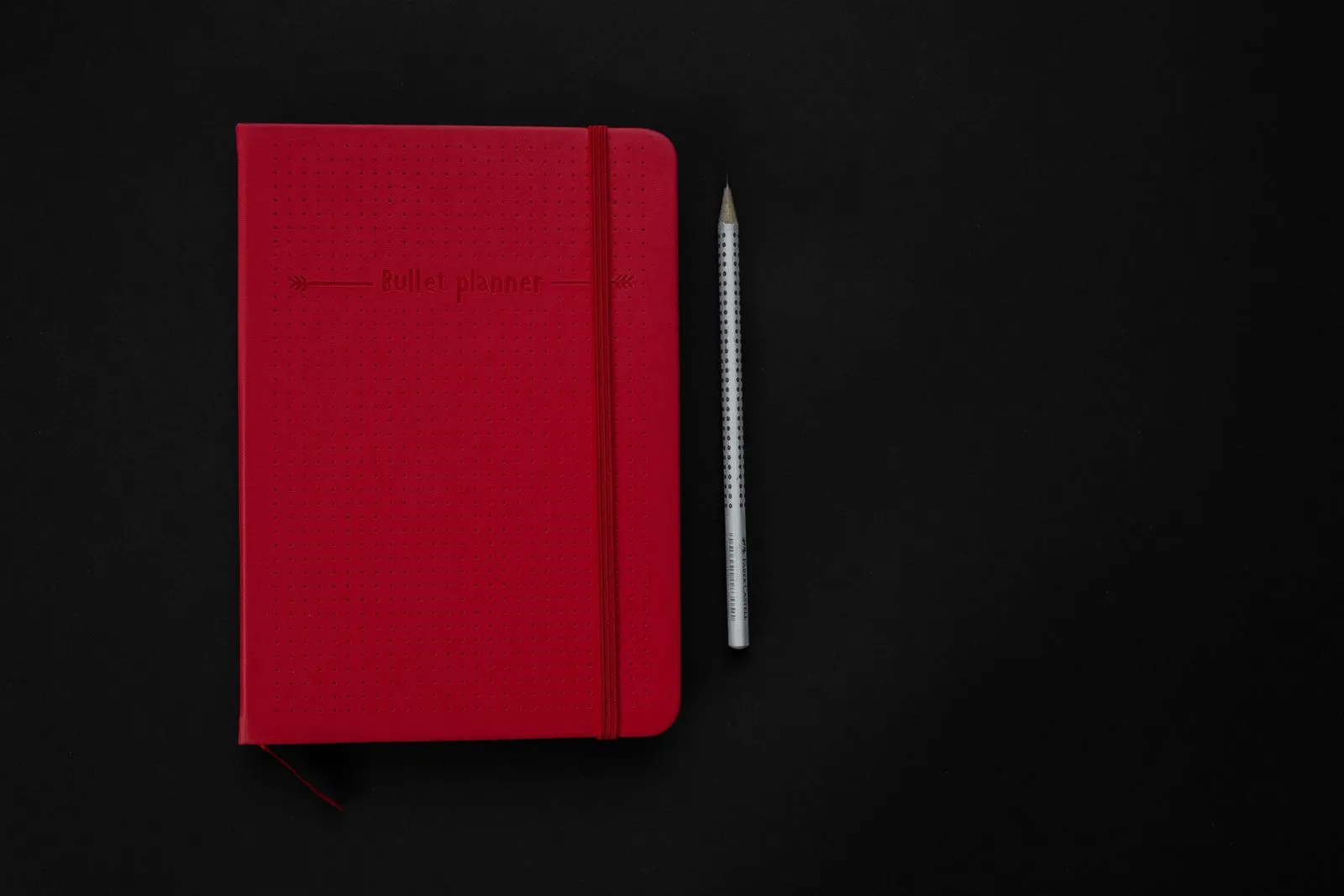
- A cheap paper notebookA couple of pounds
Any notebook, kept on the desk and a second one by the bed.
Paper beats a phone for this specifically, because opening a phone to write invites everything else on it. It is also the only tool here that works at 11pm without lighting up your face.
A recurring block, or simply the rule that you leave the desk after a difficult call.
The movement step is the one most often skipped and the one that most reliably ends the loop. Making it a rule rather than a decision removes it from the part of you that wants to keep replaying.
Free, plainly written guides and audio from the NHS, including practical stress management.
A source with nothing to sell, and the right next step if this is a weekly occurrence rather than an occasional one. It also links onward to services if it turns out to be more than a bad call.
Wherever you already keep tasks, used for the single action that comes out of the writing.
Most rumination contains one real task buried in forty minutes of replay. Writing that task down is what lets the rest go, because the part of you that was circling was holding it in case you forgot.
Your one move today
The next time you catch yourself on the third replay, write one word for the feeling on a scrap of paper. Just the word. Ten seconds, and it is the step everything else in this chapter is built on.
Next in this series
3Can mindfulness improve focus at work, or is it overhyped?Chapter 3 asks the question underneath this whole topic: whether mindfulness improves focus at work, or whether it has been oversold.New chapters go up as they are written. If you would rather not have to remember to come back, the homepage lists every series in order, so you can pick up wherever you left off.
Sources
Every quote on this page was checked against its original source before publishing.
- Lieberman, Eisenberger, Crockett, Tom, Pfeifer and Way, 2007 - Putting Feelings Into Words: Affect Labeling Disrupts Amygdala Activity in Response to Affective Stimuli, Psychological Science 18(5):421-428, reported by UCLA View source
- James W. Pennebaker - Expressive Writing in Psychological Science, Perspectives on Psychological Science, reviewing the expressive writing paradigm he began in 1986, University of Texas at Austin View source
- NHS - self-help guides, tools and activities for stress View source