Do habit trackers work?
Yes, modestly, and the way you track matters. A meta-analysis of 138 studies covering nearly 20,000 people found that monitoring progress toward a goal improved the chance of reaching it, with larger effects when the record was physical and when the results were reported to someone. The catch is that tracking is a scaffold, not the habit.
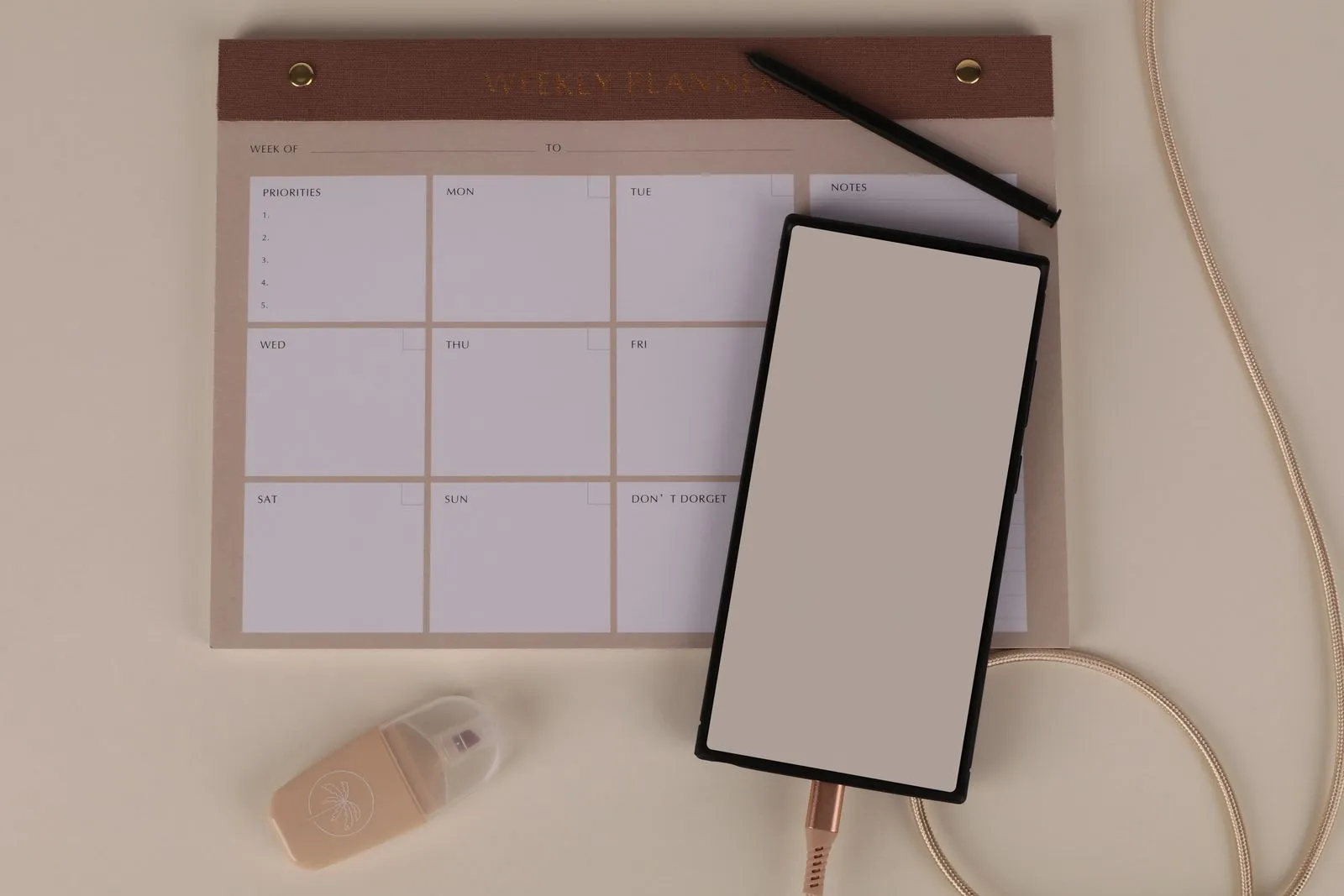
You downloaded a habit app in January. By the third week the streak had broken, opening it started to feel like being told off, and some time in February you deleted it along with the habit it was tracking.
The question worth asking is not whether apps are good. It is whether monitoring does anything, which is a question that has been studied properly, and whether the app is a good way of doing it, which is a separate question with a less flattering answer.
Chapter 1 covered the physical objects that make habits easier. This one is about measurement, and about when to stop.
What the evidence says about monitoring#
The best available answer comes from a 2016 meta-analysis in Psychological Bulletin, led by Benjamin Harkin with Thomas Webb and colleagues.
They found 138 studies, covering 19,951 people, in which participants were randomly assigned either to an intervention that prompted them to monitor progress toward a goal or to a control condition. That is a large evidence base by the standards of behaviour change research.
Monitoring worked. The interventions substantially increased how often people monitored their progress, and that increase in monitoring translated into better goal attainment. The effect on the goal itself was a standardised difference of around 0.40, which is a small to moderate effect, and the improvement in monitoring was what carried it.
Why it works. Monitoring closes a feedback loop. Without it you are running on impression, and impressions are systematically generous: almost everyone believes they exercised more, ate better and slept longer than the record shows.
How you apply it at a desk. This is a real effect at a realistic size. Tracking is worth doing and it is not the intervention itself, which is the mistake behind every abandoned app in January.
The two details that change what you should use#
The meta-analysis found two things that made monitoring work better, and both point away from the default app experience.
Effects on goal attainment were larger when the outcome was physically recorded, and larger when it was reported or made public. Neither of those is what a private tap on a phone screen provides.
Why it works. Writing something down takes longer than tapping it, and that friction appears to be useful here rather than costly, because it makes the act of recording deliberate. Telling someone adds an external account of what happened, which your memory cannot quietly revise.
How you apply it at a desk. A paper wall calendar with a cross through each day is closer to what the research supports than most apps. If you prefer an app, pick one that shows a visible grid rather than one that gamifies, and tell one person what you are doing.
Track the behaviour, not the outcome#
This is where most tracking goes wrong, and it is a choice made in the first thirty seconds of setting it up.
Weight, minutes slept and mood are outcomes. They move for reasons largely outside your control on any given day, they respond slowly, and a bad reading feels like a verdict. Did I do the band set, did I take the walk, did I eat a protein breakfast are behaviours. They are entirely within your control and the answer is always available.
Why it works. A tracker is a feedback loop, and a loop only works if the thing it feeds back on is something you can change tomorrow. Tracking an outcome produces information you cannot act on, which is how tracking turns into anxiety.
How you apply it at a desk. Pick the smallest behaviour from whichever chapter you are working on. Two minutes of band work. One protein breakfast. One walk at the 3pm dip. One box a day, one question, yes or no.
What the streak does to you#
The streak is the most effective and most damaging feature in habit tracking, and it is worth understanding both halves.
A visible run of days is a strong motivator, which is why every app has one. The problem is what happens when it breaks. A single missed day converts a growing asset into a zero, and the response to that is very often to abandon the whole thing rather than to start at one again.
This matters because of what the habit formation research found. In Phillippa Lally's study at University College London, tracking daily habit formation over twelve weeks, missing a single opportunity did not derail the process. The curve carried on. The streak counter is telling you something the underlying science does not support.
Why it works. Habit formation is a gradual increase in automaticity, not a chain of unbroken links. A missed Tuesday is a missed Tuesday, and only an app turns it into a failure.
How you apply it at a desk. Adopt the rule of never missing twice. One missed day is data. Two in a row is the beginning of a different pattern, and that is the only threshold worth reacting to.
When to stop tracking#
Almost nobody plans an exit, which is why tracking so often outlives its usefulness and becomes a chore attached to something that was working fine on its own.
Lally's participants reached most of their achievable automaticity at a median of 66 days, with an enormous spread from 18 to 254 depending on the person and the behaviour. Once a behaviour is automatic, monitoring it is measuring something that no longer needs measuring.
Why it works. The scaffold comes down when the building stands up. Continuing to track an automatic habit costs attention and, worse, can convert something effortless back into something that requires a decision.
How you apply it at a desk. Decide the end date when you start. Ten weeks is a reasonable default. At the end, stop tracking and see whether the behaviour continues. If it does, you are finished. If it does not, restart for another block, which is useful information rather than a failure.
A tracking setup that survives#
- One habit at a time. Not three. Three parallel habits means three chances to break a streak and one guaranteed bad week.
- Phrase it as a behaviour with a yes or no answer. "Two minutes of band work" rather than "improve posture". If you cannot answer it in one second at the end of the day, rewrite it.
- Record it physically. A wall calendar and a marker, or a line in a paper notebook. The meta-analysis found physical recording produced larger effects, and it also puts the record somewhere you see without unlocking anything.
- Tell one person. A partner, a friend, a colleague. Making the outcome reportable was the other factor associated with larger effects, and one message a week is enough to count.
- Never miss twice. Not a streak, a rule. It keeps the useful part of the streak and removes the part that ends habits.
- Set the end date now. Ten weeks from today, written on the calendar. Then stop and see what continues without it.
Why your impression of a week is not reliable#
The strongest argument for tracking has nothing to do with motivation. It is that memory of your own behaviour is poor in a consistent direction.
Ask someone how many days last week they exercised, ate a vegetable at lunch, or got to bed before eleven, and the answer will usually be higher than the record. Not through dishonesty: recall pulls toward the times you did the thing, because those are the memorable ones, and the ordinary Tuesday when nothing happened leaves nothing to recall.
Why it works. A record replaces impression with a count. That is most of what the feedback loop in the meta-analysis is doing, and it is why one week of honest tracking is often more informative than a month of intending to do better.
How you apply it at a desk. If you are unsure whether a habit is happening, track it for one week before changing anything. Several of the chapters on this site suggest exactly that, and the number is usually a surprise.
What to do about the week that goes wrong#
Every ten-week block contains a bad week: a deadline, an illness, a trip, a family thing. Deciding now what happens then is worth more than any app feature.
Shrink it rather than pause it. Two minutes becomes thirty seconds. The walk becomes down the stairs and back. Keeping a small version alive preserves the cue, which is much easier than rebuilding it.
Mark the week as an exception, not a gap. A note on the calendar saying what happened turns a run of blanks into a recorded reason. It is a small thing and it prevents the retrospective story that you failed.
Resume on a fixed day. Decide the restart date while you are still in the bad week, rather than waiting to feel ready. Feeling ready is not a reliable event.
What trips people up#
Tracking five things. The most common setup and the one most likely to be abandoned inside a month. Every additional row is another daily obligation and another way to feel behind.
Choosing an app that gamifies. Points, levels and streak flames are engagement features for the app, not adherence features for you. What the research supports is a visible record, which is much duller and works better.
Restarting from scratch after a break. Two missed weeks does not undo six good ones. Habit formation is a curve rather than a chain, and resuming is not the same as starting over.
Tracking forever. If you have logged the same behaviour for nine months and it is automatic, the tracking is now a habit of its own and it is not the one you wanted.
If tracking food, weight or exercise makes you anxious, or if you have a history of disordered eating, this is one to be careful with. Detailed self-monitoring is not neutral for everyone and can reinforce a difficult relationship with food or exercise. Track a behaviour rather than a number, or skip this chapter, and speak to a professional if it is a live concern.
Common questions
Do habit trackers help?
Modestly, yes. Harkin and colleagues pooled 138 studies covering 19,951 people in Psychological Bulletin in 2016 and found that prompting people to monitor progress improved goal attainment, with a small to moderate effect size of around 0.40.
What kind of tracking works best?
The meta-analysis found larger effects when progress was physically recorded and when it was reported or made public. That points toward a paper calendar and telling one person, rather than a private tap in an app.
Should I track weight or behaviour?
Behaviour. Outcomes like weight and mood move for reasons outside your control on any given day and produce information you cannot act on. A behaviour is a yes or no question you can answer in one second and change tomorrow.
What happens when I break a streak?
Nothing, according to the underlying science. Phillippa Lally's habit formation study at UCL found that missing a single opportunity did not derail the process. The streak counter treats it as a reset, which is an app design choice rather than a finding.
When should I stop tracking a habit?
Once it is automatic, which took a median of 66 days in Lally's study with a range from 18 to 254. Decide the end date when you start, ten weeks is a reasonable default, then stop and see whether the behaviour continues without it.
Tools that make this stick
Where an expert named a specific tool, that is noted. The rest are practical options, and at least one of them is always free.
- A paper wall calendar and a markerFree to a couple of pounds
Any calendar with visible days, on a wall you pass daily.
The closest thing to what the meta-analysis supports: physically recorded, visible without unlocking anything, and impossible to gamify. Listed first because it beats every app on this list for this purpose.
- Loop Habit TrackerFree and open source
An ad-free open-source habit tracker for Android with per-habit reminders.
If you want an app, this is the one that gets closest to a visible grid without points, levels or upsells. It also shows a strength curve rather than only a streak, which matches the research better.
A weekly message to a partner, friend or colleague saying what you did.
Making progress reportable was one of the two factors associated with larger effects in the meta-analysis, and it is the only free element that most people skip. One message a week is enough.
A single event ten weeks out that says "stop tracking and see what continues".
Almost nobody plans an exit, so tracking outlives its usefulness and becomes a chore attached to something already automatic. Setting the end date on day one is what prevents that.
Your one move today
Put a wall calendar or a sheet of paper somewhere you pass daily, write one behaviour at the top, and put a cross through today if you did it. That is the entire system the meta-analysis supports, and it costs nothing.
Next in this series
3How do I build a habit that sticks?Chapter 3 closes the series with the mechanism underneath all of it: how a habit forms, how long it really takes, and the one sentence that raised follow-through in a controlled trial.New chapters go up as they are written. If you would rather not have to remember to come back, the homepage lists every series in order, so you can pick up wherever you left off.
Sources
Every quote on this page was checked against its original source before publishing.
- Harkin, Webb, Chang et al., 2016 - Does Monitoring Goal Progress Promote Goal Attainment? A Meta-Analysis of the Experimental Evidence, Psychological Bulletin 142(2), covering 138 studies and 19,951 participants View source
- Lally, van Jaarsveld, Potts and Wardle, 2010 - How are habits formed: Modelling habit formation in the real world, European Journal of Social Psychology 40:998-1009, University College London View source
- American Psychological Association - summary of the Harkin meta-analysis and the conditions under which progress monitoring works best View source